
INTRODUCTION:
Imagine you’re looking at the engine of a Porsche, a machine known for its power and precision. As you observe it closely, you’re amazed by its beauty, engineering, and advanced technology. Everything looks perfectly designed. But a question comes to your mind: how does this machine create such incredible speed and that powerful sound? How does it generate so much power from fuel in its engines?
That curiosity pulls you deeper. You start wondering what’s happening inside, how each component works together, how energy is created, and how it is transformed into motion. What seems like just a block of metal is actually a highly complex system working with perfect timing and precision.
Engines are not just machines; they are the heart of modern technology. From cars and aeroplanes to massive ships, they power our world and shape how we live. In this article, we’ll explore the incredible technology behind engines and uncover how they transform fuel into the force that drives everything around us. Now, let’s dive deeper into understanding the technology behind engines.

HISTORY:
Early humans depended entirely on their own strength to perform heavy work. However, the human body has its limits. To overcome this, people began using animals to carry loads and transport goods from one place to another. They also relied on natural forces like wind and water for tasks such as grinding grains and harvesting. Still, these methods had limitations in that they were slow, unpredictable, and not powerful enough for growing needs. Humans needed a faster, stronger, and more reliable system.
This need led to a major breakthrough in the 18th century with the invention of the steam engine. Although the basic idea existed earlier, it was significantly improved by James Watt. His design used steam to move pistons, creating mechanical motion. The steam engine became the driving force behind the Industrial Revolution, transforming industries and transportation. Factories were built near railway tracks, and trains began transporting goods and people quickly over long distances. This combination of production and transportation played a key role in the rapid development of the modern world.
As technology advanced, a new type of engine emerged in the 19th century: the internal combustion engine. Instead of using steam, it burned fuel directly inside the engine to generate power. This solved major problems of steam engines, such as excessive noise, large size, and pollution from burning coal. Engineers like Nikolaus Otto developed engines that were smaller, faster, and more efficient. This innovation made personal vehicles possible and changed transportation forever.
In the 20th and 21st centuries, engine technology continued to evolve rapidly. Engineers focused on improving power, efficiency, and environmental impact. Today, we have advanced petrol and diesel engines, along with electric engines that run on batteries instead of fossil fuels. Since fossil fuels are non-renewable and contribute to pollution, electric engines have become increasingly important. Companies like Tesla, Inc. are leading this transformation, focusing on cleaner and more sustainable solutions.
From human and animal power to modern electric engines, the evolution of engines shows how innovation has continuously solved problems and shaped the world we live in today.
TECHNOLOGY:
Combustion System
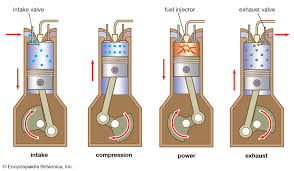
Imagine you have built a perfect engine made of strong metal, with pistons, cylinders, and every component in place. But there’s one big problem: it just sits there. No movement, no sound, no power. It’s like a heart without a heartbeat. The question that arises is, how do we bring this machine to life? Engineers faced the same challenge and discovered that a small, controlled amount of combustion inside the cylinder could generate enough energy to move the pistons without damaging the engine.
To achieve this, they designed a system where fuel is injected into the cylinder and mixed with oxygen. A spark plug then ignites this mixture, creating a controlled explosion that pushes the piston downward with great force. This process repeats continuously, expelling byproducts and generating motion again and again. In this way, chemical energy is converted into mechanical force, bringing the engine to life, just as a heartbeat gives life to the human body.
Pistons and Cylinders
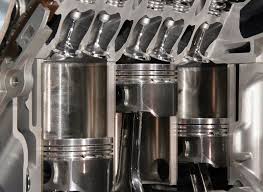
It is like the chambers of the human heart, where blood is pumped continuously to keep the body alive. In the same way, pistons and cylinders form the core space where the “spark of life” happens inside an engine. Without them, the combustion system would have no purpose. Engineers designed these parts to handle powerful explosions without being damaged, while also using that energy effectively. They create a strong, controlled environment where combustion can take place safely and efficiently.
When combustion occurs, it pushes the piston downward with great force. Then, through the rotation of connected parts, the piston moves back up, and the cycle repeats. This continuous up-and-down motion is precisely controlled, converting raw explosive energy into smooth mechanical movement. Each piston works in perfect timing, and the level of precision is so high that even a tiny particle entering the system can disturb its functioning. This shows how carefully engineered and balanced the entire system is.
Fuel Injection System
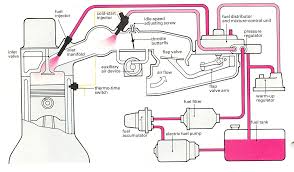
Now we understand how a spark is created in the engine using fuel, but another important question arises: how much fuel should be used? If too much fuel is injected, it does not burn completely, leading to wastage, increased pollution, and damage to the engine over time. If too little fuel is used, the engine cannot produce enough power. Early engines faced this exact problem, which reduced their efficiency, performance, and overall lifespan. Clearly, there was a need for a system that could deliver the perfect amount of fuel for complete combustion.
To solve this, engineers developed the fuel injection system. This system injects a precise amount of fuel into the combustion chamber at the exact right moment, ensuring efficient burning. Since pistons move at very high speeds, timing and accuracy are extremely important. The fuel injection system not only improves engine performance but also reduces fuel wastage and pollution. In this way, it makes engines more efficient, reliable, and environmentally friendly.
Crankshaft
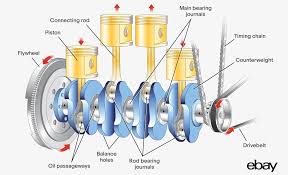
Now comes the next challenge is how to transfer the engine’s motion to the wheels. After combustion, pistons only move up and down, but this type of motion cannot directly move a vehicle forward. To drive the wheels, we need rotational motion. Engineers had to find a way to convert this linear movement into circular motion without losing energy, so that maximum power could reach the wheels.
This problem was solved with the crankshaft. It converts the up-and-down movement of the pistons into smooth rotational motion, which is then transferred to the wheels. This transformation is critical because it allows the engine’s energy to actually move the vehicle forward. You can think of it like a network of veins in the human body, carrying energy throughout the system so everything functions properly. In the same way, the crankshaft ensures that energy flows efficiently from the engine to the wheels, enabling motion and performance.
Cooling System
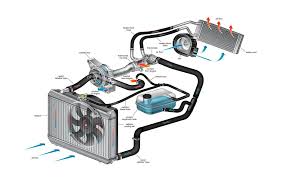
We know that when something moves very fast, it generates heat due to friction. In an engine, this problem becomes even bigger because heat is produced from two sources: friction between moving parts and the combustion process itself. This excessive heat can reduce engine performance, damage components, and shorten the engine’s lifespan. If not controlled, it can even lead to engine failure. So, engineers needed a way to manage this heat and keep the engine running safely.
To solve this, they developed the cooling system. It works by circulating a liquid coolant through the engine, which absorbs heat and carries it away to the radiator, where it is released into the air. This process keeps the engine within a safe temperature range, preventing damage and maintaining performance. It is similar to the human body, where blood carries heat away from vital organs and sweating helps release it, keeping the body cool and stable. In the same way, the engine’s cooling system protects it from overheating and ensures smooth operation.
Lubrication System
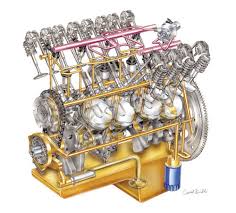
Now that we have controlled the heat from combustion, another problem remains that heat caused by friction. Inside an engine, dozens of mechanical parts are constantly moving and rubbing against each other at very high speeds. This friction not only produces additional heat but also leads to wear and tear of components and loss of useful energy. If this problem is not controlled, it can reduce efficiency and damage the engine over time.
To solve this, engineers introduced the lubrication system. It supplies a special fluid into the joints and contact surfaces of moving parts where friction is highest. This oil creates a thin protective layer between surfaces, reducing friction, minimizing wear, and allowing parts to move smoothly. As a result, less energy is wasted as heat, and the engine performs more efficiently while lasting longer
Electronic Control Unit
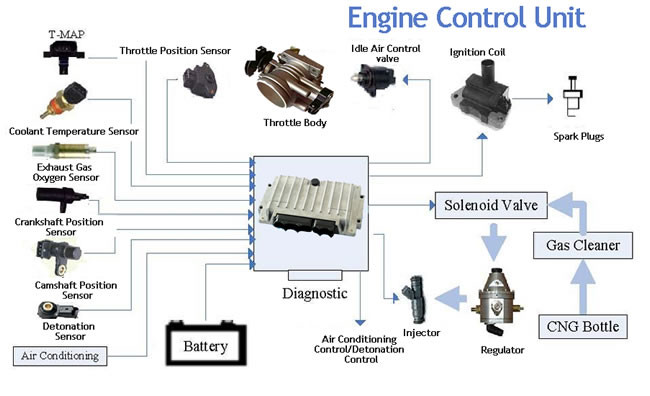
But even after solving problems like heat, friction, and fuel control, one critical challenge that remained is coordination. This problem is so important that without proper control, the entire engine could fail or even get damaged in seconds. Inside an engine, many systems work together at extremely high speed, and managing them manually is impossible. Engineers realized the need for a supervisor who could control a system that could control all components and maintain perfect coordination in every situation.
To solve this, they developed the Electronic Control Unit. It uses sensors to continuously monitor engine conditions such as speed, temperature, and performance. Based on this data, it makes instant decisions and adjusts fuel amount, ignition timing, and other parameters to keep the engine stable and efficient. Just like the human brain controls and coordinates all organs without any delay, the ECU ensures that every part of the engine works in perfect harmony, preventing errors and maintaining smooth operation
CONCLUSION:
Engines are the heart of automated machines, and because of them, our world has developed rapidly. With engine technology, we can travel thousands of miles in just a few hours, reach the skies, and even explore space. From cars on roads to rockets landing on the moon, engines have made what once seemed impossible a reality. But behind this power lies a journey of solving major challenges in power generation, motion conversion, efficiency, heat control, and coordination. What looks like a simple machine from the outside is actually a highly precise and perfectly coordinated system.
In many ways, this is similar to life. If you want to achieve something big, you must face challenges and overcome them with determination and hard work. Just like engineers solved problems step by step to create powerful engines, success in life also comes from persistence and continuous improvement. When you conquer your challenges, you begin to see the results of your efforts. One day, you may reach a level where others look up to you, just like an engine that powers everything around it, you become the driving force of your own world.
KNOW MORE:
INTERAL LINKS:
https://techman.live/wp-admin/post.php?post=389&action=edit
https://techman.live/wp-admin/post.php?post=377&action=edit
EXTERNAL LINKS: