
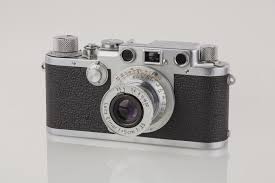
INTRODUCTION:
Imagine stepping into a mysterious portal that takes you back in time, with a futuristic watch on your wrist counting down 24 hours before you return. You find yourself in a world where cameras don’t exist—people have never even imagined capturing moments instantly. Around you are breathtaking sunsets, grand historic mansions, and a rich, vibrant culture. You feel a strong urge to capture these beautiful scenes and take them back with you. But when you reach for a camera, you realize it doesn’t exist yet. The only way to preserve moments is through paintings—slow, imperfect, and shaped by the artist’s imagination rather than reality. The true essence of a moment, its exact colors and emotions, slips away.
As your time runs out and you return to the present, you begin to understand the true value of cameras. You’ve experienced a world without them—a world where memories fade instead of being captured. This limitation is what once drove scientists and inventors to study light and shadows, searching for a way to “freeze” reality. Their efforts led to the creation of cameras, transforming how we preserve memories forever. It makes you realize a simple truth: we don’t truly value something until we experience life without it. And this is where the journey of camera technology begins.
HISTORY:
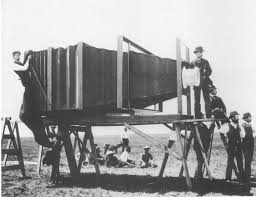
Now imagine, as you fall asleep, an angel appears and grants you the power to travel through time whenever you want. Excited, you pack your bag and set out on a journey to explore the history of cameras. Your first stop takes you centuries back, where scientists are experimenting with something called the camera obscura—a simple device that lets light pass through a small hole into a dark room, projecting an inverted image of the outside world onto a surface. You’re amazed to see images forming, thinking the mystery is solved—but then you realize they still cannot capture or store those images permanently. Curious to see more, you travel to the early 19th century and meet Joseph Nicéphore Niépce, who creates the world’s first permanent photograph after hours of exposure. It’s not perfect, but it marks the true beginning of photography. Soon after, you meet Louis Daguerre, who improves clarity and reduces exposure time, making photography more practical.
As you continue your journey, you witness a major revolution when George Eastman introduces roll film and makes cameras affordable for everyday people. Now, anyone can capture life’s precious moments—family smiles, sunsets, and nature’s beauty. But challenges remain: film can run out or get damaged, causing people to lose important memories. Technology keeps evolving, and the biggest transformation arrives in the late 20th century with digital cameras. Instead of film, these cameras use electronic sensors to capture and store images instantly. As your journey ends and you return to the present, you realize how far camera technology has come—from simple light projections to powerful digital devices—changing the way we preserve and experience our memories forever.
TECHNOLGY:
As you return to the present, the next night brings another surprise. An angel appears again—but this time, it gives you the power to travel into the future, taking away your ability to go into the past. Before you can ask anything, the angel disappears. Driven by curiosity and your growing love for cameras, you decide to explore the future to understand the technology behind them. You imagine meeting your future self—and suddenly, it happens. You see yourself as a professional photographer. It feels magical, realizing that a single curiosity has turned into a career.
Excited, you ask your future self to share knowledge about camera technology. With a smile, he begins explaining everything step by step—from how cameras capture light to the complex engineering challenges behind them. He tells you that building a perfect camera is not easy; engineers constantly work to improve image quality, reduce noise, enhance low-light performance, and make cameras faster and more compact. As he speaks, you realize that every photo you take is backed by years of innovation, problem-solving, and technological evolution.
Lens System
He begins by explaining that to capture a picture, a camera must first capture light reflected from an object—just like our eyes work. In the human eye, the pupil controls how much light enters and sends it to the retina to form an image. Inspired by this, inventors created a device that focuses light onto a sensor to produce a clear image. This device is called a lens. It plays a crucial role in determining image sharpness, depth, and overall quality.
However, like every technology, lenses have limitations. Optical imperfections can cause image distortions, especially in wide-angle shots, where the center appears sharp but the edges become blurry or slightly stretched. This happens because light rays passing through the outer edges of a lens bend more than those passing through the center, so they don’t focus at the same point. Another common issue is chromatic aberration, where different colors fail to align perfectly, creating colored edges around objects. In low-light conditions, smaller lenses also struggle to gather enough light, reducing image clarity. To overcome these challenges, modern lenses use advanced glass designs, multiple elements, and special coatings to significantly improve performance.
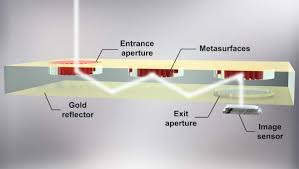
Image Sensor
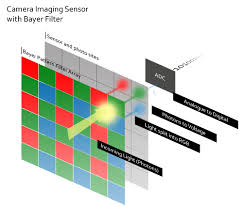
Now that we have captured light reflected from an object, we need a system similar to the human eye’s retina to convert that light into signals. In a camera, this role is performed by the image sensor. The sensor receives focused light from the lens and contains millions of tiny light-sensitive units called pixels (photosites). These pixels convert incoming light (photons) into electrical signals (electrons), which are then processed to form a digital image with accurate colors and details.
However, image sensors also face several challenges. In low-light conditions, they can produce image noise, which reduces clarity. They also struggle to capture both very bright and very dark areas in the same scene accurately, limiting dynamic range. In smartphones, the small size of sensors further restricts image quality and detail. To overcome these issues, manufacturers are continuously improving technology by developing larger sensors, advanced pixel designs, and better light sensitivity, allowing modern cameras to capture clearer and more detailed images even in difficult conditions.
Shutter Mechanism
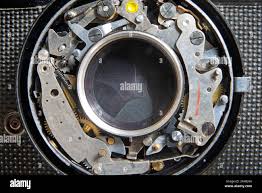
Early photography faced a major challenge in controlling light exposure. In bright conditions, too much light entered the camera, causing images to become overexposed, while in low light, images appeared dark and unclear. Since there was no proper system to control how long light entered the camera, pictures often turned out blurry. Processes like the Daguerreotype required several minutes of exposure, forcing people to sit completely still. This is why old photographs look stiff and lack real emotion, as capturing natural expressions or movement was nearly impossible.
To solve this, the shutter mechanism was introduced, allowing precise control over exposure time—even as fast as 1/1000 of a second—helping to capture sharp and realistic images. However, shutters also have limitations: slow shutter speeds can cause motion blur, while fast-moving scenes in digital cameras can create distortions known as the Rolling Shutter Effect. Modern cameras overcome many of these issues by using electronic shutters, which are faster, more reliable, and improve overall image quality and performance.
ISO Sensitivity
Even with the shutter system, images were still not always clear—especially in low-light conditions. Photographers faced a difficult choice: using a slow shutter allowed more light in but caused motion blur, while using a fast shutter froze motion but made the image too dark. This made it hard to capture real-life moments clearly at night or indoors. To solve this problem, ISO sensitivity was introduced. It increases the camera sensor’s responsiveness to light, allowing brighter images without always relying on long exposure times.
However, increasing ISO created a new challenge. Higher ISO levels often introduce noise or grain into the image, reducing clarity and detail, and making photos look less natural. To overcome this, modern cameras now use advanced sensors and AI-based noise reduction techniques, which help maintain image quality even at higher ISO levels. This makes photography more reliable in difficult lighting conditions while still preserving sharpness and detail.
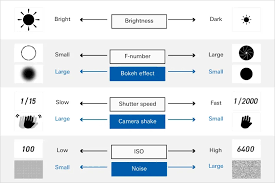
Image Processing
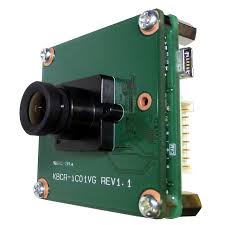
Image processing is the computing hub of a camera. In this process, the data received from the image sensor acts as raw material. The camera’s processor analyzes this data and makes important decisions to improve the final image.
It adjusts brightness, enhances colors, reduces noise, and sharpens details. It also interprets color information using filters so that the image looks natural and close to what our eyes see. This helps capture the true view of a scene along with its emotions.
In modern cameras, image processing has become even more advanced. It uses powerful algorithms to increase image quality, reduce noise further, and deliver clearer and more detailed photos. As a result, we get high-quality images quickly and efficiently.
Storage and Output
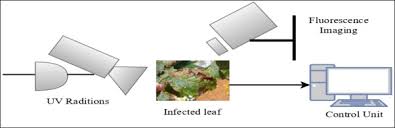
Now that we have the image, the next step is storing it so it can be viewed later. However, this creates a challenge—high-resolution images require a large amount of storage space, while the memory card in a camera has limited capacity. To solve this, cameras use image compression techniques, which reduce file size. Although compression can slightly affect image quality, modern methods are designed to maintain a good balance between size and clarity.
In addition, modern cameras use faster storage solutions like high-speed memory cards, allowing images to be saved quickly without affecting performance. Some cameras also support cloud integration, enabling users to store photos online and free up space on their devices. These advancements help manage storage efficiently while still maintaining high-quality images.
CONCLUSION:
Today, cameras have become an essential part of everyday life, used for communication, security, entertainment, and scientific exploration. Modern cameras are not just devices for capturing images; they are complex systems that integrate optics, electronic sensors, and intelligent image processing. Each component plays a critical role, and despite challenges such as noise, distortion, and storage limitations, continuous technological advancements are steadily overcoming these barriers.
In many ways, a camera is not just a device, but a medium—a messenger that captures and conveys our emotions. It preserves moments, experiences, and feelings that words sometimes cannot express. Even in the future, when we are no longer present, our photographs remain, telling our stories and reminding others of who we were and the moments we cherished.
KNOW MORE:
INTERNAL LINKS:
https://techman.live/how-the-internet-works-technology-process-and-real-world-impact/
https://techman.live/how-satellites-work-from-technology-to-real-world-impact/
EXTERNAL LINKS: