
INTRODUCTION:
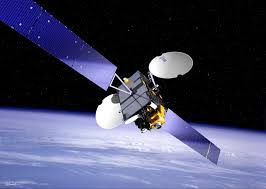
On a cold night in 1957, a historic moment changed the world forever. The Soviet Union launched a small metal object, no bigger than a beach ball, into space. This object, called Sputnik 1, became the first human-made satellite to enter Earth’s orbit and revolve around it in a circular path.
As it travelled through space, it sent simple radio signals back to Earth. Those signals were more than just sounds—they were proof of human success and the beginning of a new technological era. This historic achievement marked the start of satellite technology, which continues to shape our modern world today.
TECHNOLOGY:
Satellites were created to solve one of the biggest problems of the world—communication—by making it faster, more efficient, and more accessible at a lower cost. To understand how they help, imagine sending a message from one side of the Earth to another in just a few seconds, without using any wires. In the past, this would have sounded impossible, but today it has become reality because of satellites.
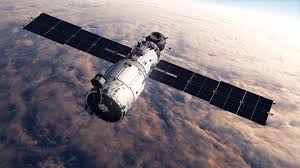
Satellites use advanced technology to work perfectly in the harsh environment of space. In space, there is almost no atmosphere, very weak effect of Earth’s gravity, and extremely low temperatures that can easily damage electronic devices. Despite these challenges, satellites continue to function smoothly.
Behind their operation is a powerful communication system along with multiple advanced technologies that keep them running, allow them to transmit signals, and maintain their position in orbit. This is what makes satellites one of the most important innovations in modern technology.
Power Generation and Management Technology
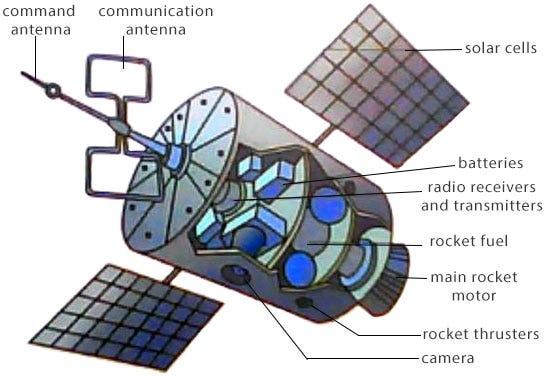
Satellites depend on power generation and management technology to operate continuously in space. In this system, large solar panels made of photovoltaic cells convert sunlight into electricity when the satellite is exposed to the Sun. However, when the satellite moves into Earth’s shadow and sunlight is blocked, it relies on onboard batteries that store energy as a backup.
A power management system then distributes this energy efficiently to different components of the satellite, ensuring that all systems receive the required power without interruption or energy loss. This allows the satellite to function smoothly at all times, even in challenging space conditions
Communication Technology
Another important technology is communication technology, which allows satellites to communicate with Earth’s research and control centers. This system includes antennas that receive signals from Earth, and amplifiers (transponders) that strengthen these signals before retransmitting them back to another location on Earth.
These signals travel in the form of radio waves, enabling services such as television broadcasting, satellite communication, and global internet connectivity. This technology is what makes fast and reliable long-distance communication possible
Onboard Computer and Data Handling Systems
The onboard computer and data handling system acts like the brain of the satellite. It controls all system operations, processes data, manages communication, and executes commands sent from ground stations.
It also continuously monitors the health and performance of the satellite to ensure everything is working properly. Just like a supervisor, this system keeps track of every function and makes sure the satellite operates smoothly and efficiently
Attitude and Orbit Control Technology
Attitude and Orbital Control Technology is used to maintain the correct position and orientation of satellites. This technology employs gyroscopes, reaction wheels, and small thrusters to ensure stability. If a satellite becomes unstable, these systems work together to restore balance. Additionally, they allow for precise adjustments to avoid collisions and maintain accurate positioning in orbit.
Payload Technology
Satellites also carry payload technology, which consists of the main mission equipment designed to perform the satellite’s primary function. Payloads can vary depending on the mission type, such as communication payloads, scientific payloads, or reconnaissance payloads. They include various instruments like cameras, sensors, or X-ray detectors, depending on the purpose of the satellite. Essentially, the payload is what enables the satellite to carry out its mission successfully.
ORS and Imaging Systems
For observation and data collection, satellites use sensors and imaging systems such as cameras, infrared sensors, and radar. These technologies capture detailed images, monitor weather patterns, and study environmental changes on Earth. Think of it like a professor using math and physics to detect patterns—satellites use advanced technological instruments to observe, analyze, and understand changes on our planet.
Thermal Control Technology
Space has extremely low temperatures, and when a satellite is exposed directly to the Sun, it can overheat, preventing it from functioning properly without an external temperature regulation system. To address this, satellites use thermal control technology, which includes special insulating coatings to protect against the cold and active heat control systems to prevent overheating in sunlight and freezing in darkness. This ensures the satellite can operate reliably over long periods.
Advanced Structural and Material Technology
Finally, satellites are built using advanced structural and material technologies, including lightweight yet strong materials such as aluminum alloys and carbon composites. These materials allow the satellite to withstand harsh forces and vibrations during launch and operation, ensuring long-term durability. They also protect sensitive instruments from unexpected impacts, keeping the satellite fully functional throughout its mission.
IMPACT:
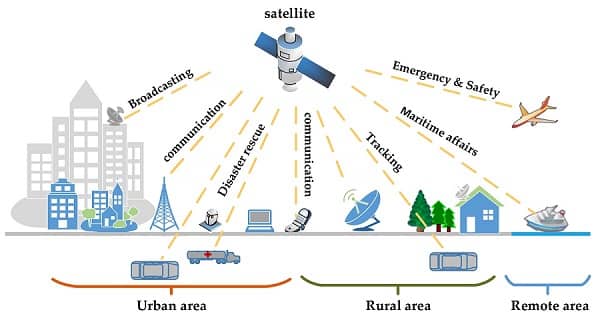
Satellites play a vital role in the modern world, and without them, our current level of technology would be impossible. They have transformed communication, allowing people to connect across the globe instantly. Today, you can communicate with a relative or colleague on the other side of the world in just a few seconds. Satellites also impact navigation, enabling airplanes, ships, and cars to reach their destinations accurately and safely. They make it possible to watch TV, access high-speed internet, and maintain connectivity even in remote areas, improving global communication and development.
Beyond communication, satellites are essential for weather forecasting and disaster management. By continuously monitoring Earth’s atmosphere, they help scientists predict storms, cyclones, and climate changes in advance, allowing people to prepare for disasters and reduce economic losses. During floods, earthquakes, and wildfires, satellites provide real-time images and data, enabling governments and rescue teams to respond quickly and effectively. They also support scientific research, helping study Earth’s environment, oceans, and outer space, leading to new discoveries and a better understanding of our planet.
Satellites also play a critical role in national security, agriculture, and global trade. They support surveillance, border monitoring, and intelligence gathering, helping protect countries and save lives. In agriculture, satellites monitor rainfall and climate patterns, allowing farmers to adjust cropping techniques for better yields. They also aid in secure transactions, transportation, and global trade, providing data on ocean currents and safe shipping routes. Overall, satellites are essential for a connected, efficient, and technologically advanced world, shaping the future of global innovation.
CONCLUSION:
In conclusion, satellites will continue to evolve, enabling faster communication, improved global connectivity, and groundbreaking discoveries in space. In many ways, satellites are more than just machines in orbit—they are the invisible force that keeps our world running smoothly, connected, and advancing, driving the development of technology, science, and society.
KNOW MORE:
INTERNAL LINKS:
https://techman.live/wp-admin/post.php?post=338&action=edit
https://techman.live/wp-admin/post.php?post=329&action=edit
EXTERNAL LINKS: