
INRODUCTION:
In the modern world, our lives are highly dependent on the internet. Without it, we can hardly imagine managing our daily activities. This massive evolution in technology has made life easier, faster, and more connected. From communicating with people across the world to watching movies on platforms like Netflix and using social media, the internet has become an essential part of our lives—almost like a basic necessity for the new generation.
But have you ever wondered what actually happens behind the scenes when you open a website or click on a link to watch your favorite movie? How does it appear instantly on your laptop or phone?
The internet is not just a single system; it is a vast network of interconnected devices spread across the globe, all working together to share information within seconds. Every time you search on Google, send an email, or stream a video, a complex process powered by advanced technologies takes place.
In this article, we will explore the technology behind the internet, understand how it works, and dive deeper into this invisible system that powers our modern world.
HISTORY:
In the mid-20th century, computers had become powerful enough to perform complex tasks, but there was still a major problem—there was no reliable and fast way to send information from one computer to another, especially over long distances. To solve this issue, a small project called ARPANET was developed in the late 1960s. Its main goal was to connect computers and allow researchers to share information quickly and efficiently. Although it was a great start, it still had many limitations and needed improvement. Over time, as technology advanced in the 1970s and 1980s, new systems like TCP/IP were introduced, making it possible for different networks to communicate with each other. This idea of interconnected networks became the foundation of the modern internet.
A major breakthrough came in 1989 when Tim Berners-Lee introduced the World Wide Web, which made the internet easy to use through websites and browsers. This innovation was a game changer, and the internet began spreading rapidly across the world, reaching homes, schools, and offices. People could now access information within seconds without leaving their homes, and businesses started using the internet to reach customers globally. Over time, it solved many communication challenges and became a powerful tool for information sharing, communication, and entertainment. Today, the internet connects billions of devices and plays a vital role in our daily lives.
TECHNOLOGY:
Developing this network was not an easy task. It was developed over a long period through continuous research, where engineers and scientists solved many challenges during its development. Now, let us dive deeper into the technology behind the internet.
IP Address
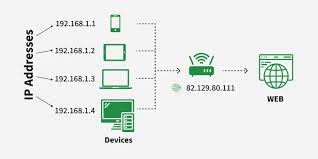
When early computers were connected to share data, one major problem was identifying which device was sending and which one was receiving the information. There was no unique way to recognize each device, and data also needed a clear destination. To solve this problem, the concept of IP addresses was introduced. Every device on the internet is assigned a unique IP address, which ensures that information reaches the correct device without any confusion.
You can understand this with a simple example: the internet works like a postman, and an IP address is like a home address. Just as every house has a unique address to receive mail correctly, every device has a unique IP address. This helps the internet deliver data to the right destination, just like a postman delivers letters to the correct home.
Domain Name System
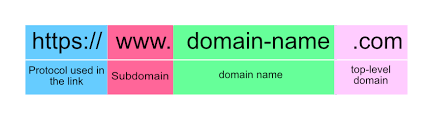
After solving the problem of identifying devices with IP addresses, a new challenge appeared—humans cannot easily remember long strings of numbers. Remembering multiple IP addresses for different websites would be very difficult and confusing. To make the internet more user-friendly, the Domain Name System was introduced.
DNS works like a translator. It converts easy-to-remember domain names, such as google.com, into their corresponding IP addresses. This means users don’t need to remember complex numbers—they can simply use names to access websites. You can understand this with a simple example: instead of remembering a complicated house number, you use a simple name. This makes it much easier for the “postman” (internet) to deliver information to the correct place.
Data Packets
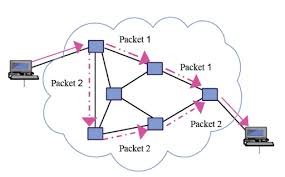
When data started being shared over networks, another problem appeared—sending a large amount of data all at once was slow and unreliable. If something went wrong, the entire data could be lost or delayed. To solve this issue, data is divided into smaller pieces called packets.
These packets travel independently through different routes across the internet and are reassembled when they reach the destination. This method makes data transfer faster, more efficient, and more reliable.
You can understand this with a simple example: imagine one postman trying to deliver a very large package—it would be slow and difficult. Instead, the package is divided into smaller parts and sent through different postmen using different routes. Even though they travel separately, all parts reach the same destination and are put back together.
Routers and Switches
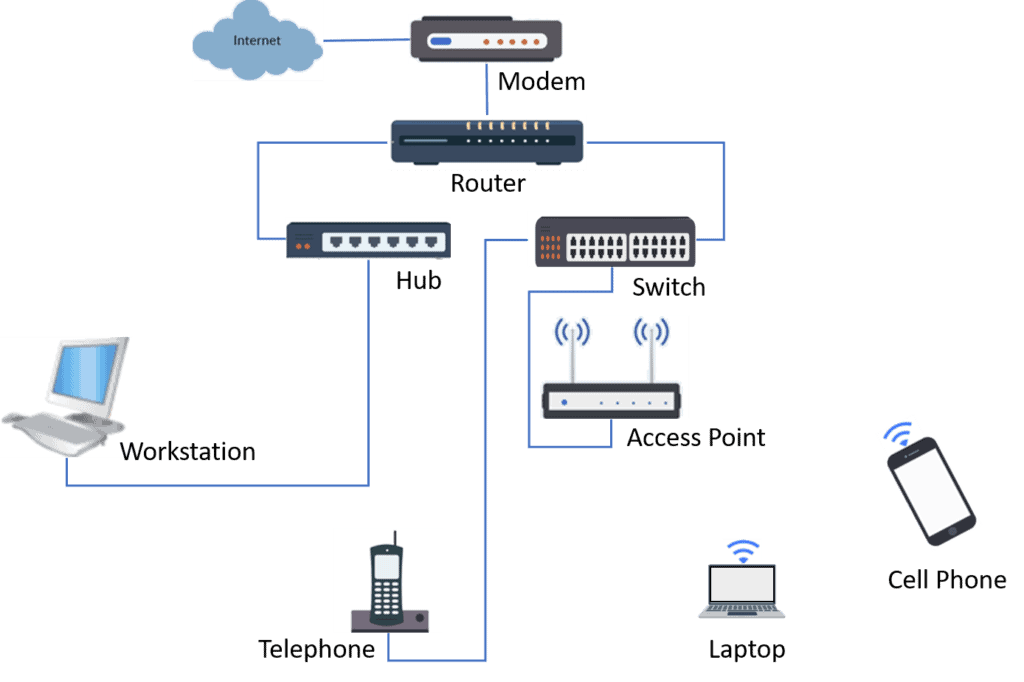
As everything started working smoothly, a new challenge appeared with the growth of the internet—managing the increasing flow of data. As more devices connected and more data was shared, it became difficult to control its movement. Without proper direction, data could get lost, delayed, or take inefficient paths.
To solve this problem, routers and switches were introduced. These devices guide data packets and ensure they follow the best and fastest route to their destination. They act like traffic controllers, managing the flow of data across networks and ensuring smooth delivery. You can also think of them as supervisors who guide the “postmen” (data packets), helping them reach the correct destination efficiently.
Transmission Media
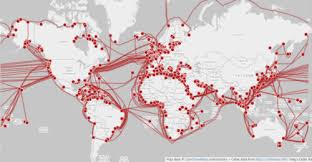
Even after solving earlier problems, the internet was still limited to short distances. It could not efficiently transfer data over long distances—for example, people in one country could not easily access data or watch content from another part of the world. The main issue was the lack of a fast and reliable long-distance communication system.
To solve this, advanced transmission media like optical fiber cables and copper wires were developed. Optical fibers use light signals to transmit data at extremely high speeds, even across continents. These cables are laid under oceans, known as submarine cables, connecting different parts of the world. This was a major achievement, as it allowed data to travel across the globe in seconds. Today, because of this technology, we can easily access information, watch movies, and communicate with people from the other side of the world through the internet.
Wireless Technology
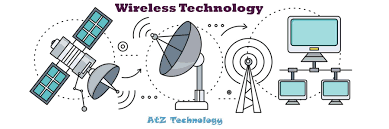
While optical cables made the internet extremely fast, they had a limitation—they restricted mobility. In the early days, computers had to be physically connected to networks using copper wires or optical fiber cables. These systems were fixed in one place, often requiring large setups, and users could only access the internet where a physical connection was available.
To overcome this limitation, wireless technologies were developed. Technologies like Wi-Fi and mobile networks (4G and 5G) allow users to connect to the internet without cables, anytime and anywhere. These systems rely on towers, satellites, and receiver stations to transmit signals over long distances. As a result, the internet became more accessible and convenient, allowing people to use it on mobile devices instead of being limited to fixed computers.
You can understand this with a simple example: earlier, a postman delivered letters using a bicycle, which was slow and limited. Now, with a superbike, delivery is much faster and more flexible. Similarly, wireless technology has made internet access faster, easier, and more mobile for everyone.
Protocols
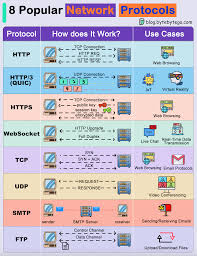
With so many devices connected worldwide, there had to be a common set of rules to ensure proper communication. These rules are called protocols. Protocols like TCP/IP and HTTP/HTTPS were developed to manage how data is sent, received, and understood between devices.
They ensure that data reaches the correct destination safely and without errors. They also provide security features, especially HTTPS, which helps protect data from theft or unauthorized access during transmission.
IMPACT:
The internet has completely transformed the way we communicate and interact with the world. It allows people to connect instantly across long distances through social media, emails, and video calls. Its impact is clearly visible in the education sector, where students can access online courses, digital study materials, and learning platforms from anywhere. Researchers and scientists can easily find information and collaborate globally. It has also changed the way businesses operate, enabling online shopping, digital payments, and global marketing. Companies can advertise their products on the internet and stay directly connected with their customers, providing better services. All of this is possible within just a few seconds, making the internet an essential part of modern life.
At the same time, the internet has also influenced entertainment and daily lifestyle. People can watch movies, stream music, play online games, and stay updated with news in real time. However, along with these benefits, there are risks such as cybercrime, privacy threats, and the spread of misinformation, which can mislead people or even harm individuals and society. Therefore, it is important to use the internet wisely, avoid unsafe or third-party websites, and stay aware of online risks. Despite these challenges, the internet continues to be widely used because of its powerful advantages.
CONCLUSION:
The internet has become the backbone of modern life, connecting billions of devices and people across the world. What started as a small project has now transformed the entire world, changing the way we live, communicate, and work. It has reshaped our lifestyle and made information more accessible than ever before.
As technology continues to advance, the internet will become even faster, smarter, and more essential in our lives. Understanding how it works not only increases our knowledge but also helps us appreciate the innovation behind it. In the end, the internet is not just a technology—it is a powerful force shaping the future of humanity.
KNOW MORE:
INTERNAL LINKS:
https://techman.live/wp-admin/post.php?post=352&action=edit
https://techman.live/wp-admin/post.php?post=338&action=edit
EXTERNAL LINKS: