

INTRODUCTION:
Today, watches do more than simply tell time; they have become a reflection of a person’s lifestyle, personality, and social status. The more expensive and rare a watch is, the more exclusive it appears in society. Many people consider luxury watches a symbol of success, wealth, and achievement, which is why they are willing to spend thousands or even millions of dollars to own something unique. Several companies compete to fulfil this demand, but one brand that stands at the top of the luxury watch industry is Audemars Piguet (AP), particularly its iconic Royal Oak collection. From celebrities and business leaders to wealthy watch collectors, people admire the Royal Oak because of its distinctive design, exclusivity, and engineering. Wearing an AP Royal Oak is not just about showing the time; it is also about owning a piece of watchmaking history. Its value comes not only from its price but also from its rarity, craftsmanship, heritage, and remarkable mechanical technology.
What makes the AP Royal Oak truly special is that it does not depend on batteries, processors, or artificial intelligence like modern electronic devices. Instead, it uses hundreds of microscopic mechanical components that work together with extraordinary precision to measure time. Introduced in 1972, the Royal Oak created a revolution in the luxury watch industry with its unconventional octagonal bezel, exposed screws, integrated bracelet, and innovative automatic mechanical movement. Every component represents a combination of science, traditional craftsmanship, and advanced engineering. Some internal components are even smaller than a grain of rice, yet they work together continuously to maintain accurate timekeeping. This incredible combination of design and mechanical engineering makes the Royal Oak a masterpiece of horology. In a world increasingly dominated by smartphones and smartwatches, the AP Royal Oak proves that traditional mechanical technology still holds a special place in modern innovation.

HISTORY:
The history of the AP Royal Oak began in 1972, when Swiss luxury watchmaker Audemars Piguet introduced a watch that completely challenged the traditional definition of luxury. At that time, luxury watches were generally associated with precious metals such as gold, elegant designs, and traditional craftsmanship. Many manufacturers believed that using expensive materials was the key to making a watch luxurious. However, Audemars Piguet decided to take a completely different approach. Instead of making its new watch entirely from gold, the company used stainless steel, a material commonly associated with industrial products, and combined it with exceptional engineering and high-end craftsmanship. This revolutionary approach resulted in the creation of what is widely recognised as the world’s first luxury stainless-steel sports watch. It demonstrated that a watch could be luxurious not just because of the materials used but also because of its engineering, design, and craftsmanship.
The Royal Oak was designed by the legendary Swiss watch designer Gerald Genta, who reportedly created its design overnight after receiving an urgent request from Audemars Piguet. Its design was inspired by traditional diving helmets, particularly their distinctive shape and visible screws. Genta gave the watch a bold octagonal bezel, exposed screws, an integrated stainless-steel bracelet, and a distinctive mechanical appearance. These features made it look completely different from the elegant gold watches that dominated the luxury market at that time. Rather than hiding its industrial appearance, the Royal Oak proudly displayed its engineering and mechanical details. Its unusual design was a bold experiment that challenged expectations of an expensive luxury watch.
However, the Royal Oak did not receive universal appreciation when it was first introduced. Some traditional watch enthusiasts criticised its industrial appearance and questioned why anyone would pay a luxury price for a stainless-steel watch. They were accustomed to associating luxury with gold and precious metals, so the Royal Oak’s unconventional design was difficult for them to accept. Over time, however, people began to recognise the remarkable engineering, detailed craftsmanship, and originality behind its design. The watch gradually gained popularity and became a symbol of innovation, exclusivity, and modern luxury. Its revolutionary concept influenced the entire watch industry and inspired countless luxury sports watches that followed. Today, the AP Royal Oak is regarded as one of the most iconic designs in the history of mechanical watchmaking.

TECHNOLOGY:
The AP Royal Oak is a remarkable masterpiece of watchmaking, and its true beauty lies not just in its exterior stainless-steel frame but also in the sophisticated mechanical engineering hidden inside it. Unlike modern smartwatches, which depend on batteries, processors, and software that can become outdated as technology advances, the Royal Oak operates through an advanced mechanical movement containing hundreds of tiny, precision-engineered components working together. This is what makes it so special in today’s technology-driven world: it preserves the heritage of traditional mechanical watchmaking while maintaining remarkable accuracy. You might think that a watch without modern electronic technology cannot compete with battery-powered watches, but that is not entirely true. The Royal Oak uses an entirely different approach to measuring time. One of the most important technologies behind its operation is the automatic self-winding system, which allows the watch to store energy through the natural movement of the wearer’s wrist. Unlike battery-powered watches, it does not require an electronic battery to operate. Its mechanical system converts everyday wrist movements into stored energy, allowing it to run automatically. When fully wound, many Royal Oak models can continue running for approximately 60–70 hours, depending on the movement.
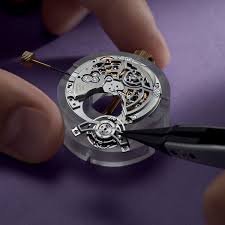
The most fascinating part of this technology is a semicircular metal weight called a rotor. Whenever you move your wrist, the rotor rotates due to gravity and inertia, transferring mechanical energy through a series of tiny gears. This energy winds a tightly coiled spring known as the mainspring, which stores the energy and gradually releases it to power the watch. The stored energy then travels through a series of gears called the gear train, while two essential components, the escapement and balance wheel, regulate its release at extremely precise intervals. The balance wheel oscillates rapidly back and forth, creating a consistent rhythm that controls how accurately the watch measures time. Meanwhile, the escapement releases energy in carefully controlled intervals, allowing the watch’s hands to move at the correct speed. Every component must work with extraordinary precision because even a microscopic error can affect the watch’s accuracy. This complex combination of gears, springs, and levers is what allows the Royal Oak to measure time without relying on electronic processors or batteries.
Another fascinating feature of mechanical watchmaking is the use of synthetic ruby jewels inside the movement. These tiny jewels are placed at important contact points where moving components experience friction. Their extremely hard and smooth surfaces help reduce friction and wear, allowing the mechanism to operate efficiently for many years. Some AP movements contain dozens of these jewels, depending on their design and complexity. However, traditional craftsmanship is only one part of the Royal Oak’s engineering. Audemars Piguet also uses modern manufacturing technologies, including advanced CNC machines, precision cutting systems, and specialised polishing equipment, to manufacture its components with extraordinary accuracy. Despite these advanced machines, many components still require careful hand-fini
MATERIAL:
One of the reasons why the AP Royal Oak is considered a masterpiece of modern watchmaking is the advanced materials and engineering techniques used in its construction. Every part of the watch is carefully designed to combine durability, precision, comfort, and luxury in a single timepiece. Let’s start with its case. Depending on the model, the Royal Oak case can be manufactured from high-grade stainless steel, titanium, ceramic, or even forged carbon. These materials are carefully selected because of their unique physical properties. Stainless steel offers strength and corrosion resistance, titanium is exceptionally lightweight and highly resistant to corrosion, while ceramic provides outstanding scratch resistance and durability. Another important component is the sapphire crystal glass that protects the watch dial. It is made from synthetic sapphire, a transparent material produced from aluminium oxide (Al₂O₃). With a hardness of 9 on the Mohs scale, it is extremely difficult to scratch. It is carefully cut and polished to achieve exceptional transparency and clarity, allowing the wearer to view the dial while protecting the delicate components underneath. Some models also feature an anti-reflective coating that reduces unwanted reflections and improves visibility under bright lighting. Even the exterior finishing requires extraordinary precision. The Royal Oak’s surfaces are carefully brushed and polished to create its iconic combination of sharp edges, smooth textures, and reflective surfaces. Achieving these precise angles and transitions requires advanced manufacturing techniques, along with hours of careful hand-finishing by highly skilled craftsmen.
Another essential engineering feature is the Royal Oak’s water-resistance technology, which protects its delicate internal mechanical components from water and moisture. Since the movement contains hundreds of tiny gears, springs, and other precision components, even a small amount of water entering the case can cause corrosion, damage, and affect timekeeping accuracy. To prevent this, Audemars Piguet uses specially designed rubber gaskets, tightly fitted case components, and sealing rings around the crown. These rubber gaskets are carefully positioned between different parts of the watch case to prevent water from entering through microscopic gaps. In the original 1972 Royal Oak, eight visible hexagonal screws secured the octagonal bezel and compressed a specially designed gasket to create a protective seal around the movement. The crown, which is used to adjust the time, is another possible entry point for water, so additional rubber O-rings help prevent moisture from entering. Before watches leave the manufacturing process, they undergo specialised water-resistance tests to check whether their cases and seals can withstand the pressure specified for their models. The original Royal Oak was designed with water resistance up to 100 metres, although this rating varies across modern models.
Even the Royal Oak’s integrated bracelet is engineered with remarkable precision. Unlike ordinary watch bracelets that connect to the case through separate lugs, its integrated design creates a seamless connection between the watch case and bracelet. Every individual link is carefully manufactured, finished, and assembled to provide flexibility, strength, and comfort while maintaining its distinctive metallic appearance. The combination of carefully selected materials, advanced manufacturing technologies, precision engineering, and traditional hand-finishing makes the AP Royal Oak far more than an ordinary luxury accessory. It demonstrates how modern science and traditional craftsmanship can work together to create a timepiece that is both technologically sophisticated and visually distinctive.

CONCLUSION:
The Audemars Piguet Royal Oak is far more than just a luxury watch or a symbol of wealth; it represents one of the finest examples of human engineering, precision, and craftsmanship in the history of horology. In today’s digital age, dominated by smartphones, artificial intelligence, and smartwatches, the AP Royal Oak demonstrates that traditional mechanical technology still holds remarkable value. Instead of depending on batteries, processors, or software, it uses the principles of mechanical science to measure time through hundreds of precisely engineered components working together in harmony. What truly makes the Royal Oak special is its extraordinary combination of art, science, and engineering. It is a machine small enough to fit on the human wrist, yet complex enough to showcase some of the world’s most advanced precision manufacturing and watchmaking techniques. Even more than 50 years after its introduction in 1972, the Royal Oak continues to inspire watchmakers, engineers, designers, and technology enthusiasts around the world, proving that true innovation is not always about adopting the newest technology but also about perfecting the technology we already have.
INTERNAL LINKS:
https://techman.live/pentagon-ai-warfare-how-artificial-intelligence-is-changing-future-wars/
https://techman.live/samsung-galaxy-s26-series-review-is-this-the-best-phone-of-2026/
EXTERNAL LINKS:
https://www.bigmoewatches.com/blog/why-are-ap-watches-expensive