
INTRODUCTION:
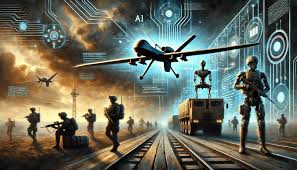
As humans, we have traveled a long journey from the ancient past, when people lived in forests, to the modern world of massive cities and advanced technology. Over time, our lifestyle, needs, and civilization have completely changed. However, one thing has never truly changed war. Throughout history, humans have fought battles for greed, territory, power, and arrogance. In ancient times, people fought using stone tools and primitive weapons. Later, during the medieval age, armies fought with swords, horses, and elephants to conquer nations. In the modern era, warfare transformed again with the advent of mechanical machines such as tanks, submarines, missiles, and fighter jets, all controlled directly by humans. But now the world is entering a completely new phase where the battlefield of the future may no longer be shaped mainly by soldiers, tanks, or fighter aircraft. Instead, artificial intelligence is beginning to take control of warfare itself.
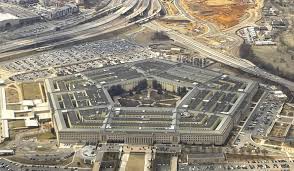
Today, the United States Pentagon is investing billions of dollars into advanced AI-powered military systems capable of analyzing threats, controlling autonomous drones, processing massive surveillance data, and assisting commanders in combat decisions within seconds. What once sounded like science fiction is rapidly becoming reality. The Pentagon is now working with some of the world’s largest technology companies to integrate AI into military operations, creating intelligent defense systems, autonomous weapons, and machine-driven battlefield analysis. In this new era, machines and algorithms could play a larger role than human soldiers, reducing direct human involvement on the battlefield. While this technology sounds revolutionary, it also carries enormous risks, including the fear of AI domination, autonomous killing systems, and loss of human control in warfare. In this article, we will explore what AI warfare really is, how dangerous it can become, which countries are competing in this global AI arms race, and how America is building these powerful systems with the support of major technology companies.
WHAT IS AI WARFARE?
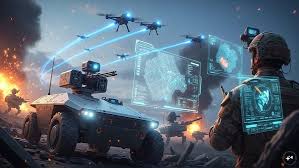
AI warfare refers to the use of artificial intelligence technologies in military operations and combat systems. In modern warfare, militaries no longer rely completely on human soldiers for analyzing information and making decisions. AI systems can process massive amounts of battlefield data within seconds and help armies respond faster than ever before. Today’s battlefields are filled with satellites, drones, radars, sensors, and surveillance systems that continuously generate huge amounts of information. Since this data changes every second, it becomes almost impossible for humans alone to analyze it quickly during combat, where every second can decide victory or defeat. AI solves this problem by identifying patterns, detecting threats, tracking enemy movements, and suggesting military actions in real time.
One of the most important parts of AI warfare is machine learning. Machine learning systems are trained using massive datasets so they can recognize objects, predict enemy behavior, and improve their performance over time through experience and analysis of previous mistakes. AI-powered software can identify tanks, missiles, aircraft, ships, and even hidden targets from surveillance images far faster than traditional military systems. Because of the advanced training already built into these systems, AI is now connected with many modern weapons platforms. Some military systems can operate with minimal human control, allowing AI to manage weapons and machines more efficiently in certain situations.
AI warfare is already being used in many advanced military technologies. Examples include AI-powered drones that can fly independently and collect intelligence about enemy positions, robotic combat vehicles that move automatically and track hostile targets, automated defense turrets that can intercept incoming missiles, and intelligent missile systems capable of tracking and attacking targets with high accuracy. Another major use of AI is battlefield decision-making. Advanced military AI can analyze multiple combat scenarios, estimate risks, and help commanders choose the best strategy within seconds. In modern warfare, where speed is critical, even a few seconds of faster decision-making can completely change the outcome of a battle.
Cyber warfare is another rapidly growing area of AI military technology. AI systems can detect cyberattacks, defend military networks, and identify hacking attempts much faster than human analysts. Some experts believe that future cyber wars may involve AI systems fighting against each other in digital space without direct human involvement. Today, AI warfare is no longer just a future concept. Countries around the world are already testing autonomous drones, robotic soldiers, intelligent surveillance systems, and AI-assisted combat platforms. As artificial intelligence becomes more powerful, it is expected to completely transform the future battlefield and redefine the nature of war itself.
WHY THE PENTAGON IS INVESTING IN AI?
As humans, we have traveled a long journey from the ancient past, when people lived in forests, to the modern world of massive cities and advanced technology. Over time, our lifestyle, needs, and civilization have completely changed. However, one thing has never truly changed war. Throughout history, humans have fought battles for greed, territory, power, and arrogance. In ancient times, people fought using stone tools and primitive weapons. Later, during the medieval age, armies fought with swords, horses, and elephants to conquer nations. In the modern era, warfare transformed again with the arrival of mechanical machines such as tanks, submarines, missiles, and fighter jets controlled directly by humans. But now the world is entering a completely new phase where the battlefield of the future may no longer be shaped mainly by soldiers, tanks, or fighter aircraft. Instead, artificial intelligence is beginning to take control of warfare itself.
Today, the United States Pentagon is investing billions of dollars into advanced AI-powered military systems capable of analyzing threats, controlling autonomous drones, processing massive surveillance data, and assisting commanders in combat decisions within seconds. What once sounded like science fiction is rapidly becoming reality. The Pentagon is now working with some of the world’s largest technology companies to integrate AI into military operations, creating intelligent defense systems, autonomous weapons, and machine-driven battlefield analysis. In this new era, machines and algorithms could play a larger role than human soldiers, reducing direct human involvement on the battlefield. While this technology sounds revolutionary, it also carries enormous risks, including the fear of AI domination, autonomous killing systems, and loss of human control in warfare. In this article, we will explore what AI warfare really is, how dangerous it can become, which countries are competing in this global AI arms race, and how America is building these powerful systems with the support of major technology companies.
COMPANIES WORKING WITH THE PENTAGON:
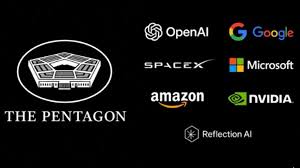
This project is extremely large and highly important for the future of the U.S. military, so the Pentagon is accelerating its development by partnering with some of the world’s biggest technology companies. These companies are helping the U.S. military build advanced artificial intelligence systems for defense, surveillance, cybersecurity, autonomous weapons, and battlefield decision-making. One of the major companies involved is OpenAI, which is working on advanced language models and AI systems capable of analyzing massive amounts of military data. These systems can assist in strategy planning, intelligence operations, report analysis, translation, communication, and real-time battlefield support. Such AI models could help soldiers and military analysts receive important information about targets and threats within seconds during combat situations.
Another major partner is Microsoft, which plays a critical role in Pentagon AI projects through its Azure cloud computing platform. This infrastructure allows the military to securely store and process enormous amounts of classified data, which is essential for national security. A leak of such sensitive information could create major global security risks. Microsoft has also contributed to military augmented reality technologies and AI-powered defense systems designed for the U.S. Army, helping improve battlefield awareness and operational efficiency.
Google has also participated in military AI-related programs. The company previously worked on Project Maven, a Pentagon initiative that used artificial intelligence to analyze drone surveillance footage. The AI system could identify objects, track movements, and help military operators process intelligence data much faster than traditional methods. This technology improves precision, surveillance capabilities, and mission efficiency while reducing the chances of human error during military operations.
Another important contributor is Amazon Web Services. Although the company is mainly known for cloud computing rather than AI research itself, it plays a vital role in providing powerful cloud infrastructure for defense operations. Modern military AI systems require massive computing power, and cloud platforms help the Pentagon manage military databases, AI models, and cybersecurity systems more efficiently. This greatly improves both the performance and security of defense operations.
NVIDIA is one of the key hardware providers behind military AI development. Advanced AI systems require extremely powerful GPUs to train machine learning models, process battlefield simulations, and run complex calculations without crashing or slowing down. NVIDIA’s high-performance computing technology is essential for modern artificial intelligence systems, allowing AI models to become faster, smarter, and more accurate over time through continuous training and data analysis.
Another major company involved is SpaceX, which plays an important role in military communication and global surveillance. Through its Starlink satellite network, SpaceX can provide internet connectivity in war zones and remote military regions where traditional communication systems may fail. Satellite-based communication is becoming increasingly important for future AI-driven military operations because it allows militaries to maintain real-time coordination, surveillance, and communication across the world, even in difficult environments.
Palantir Technologies is also gaining attention for its military data analysis and intelligence platforms. Its AI systems can combine information from drones, satellites, sensors, and battlefield reports to help military commanders make faster and more accurate decisions during combat operations. By integrating data from multiple sources, the company’s technology helps improve situational awareness and battlefield coordination.
These partnerships show how modern warfare is becoming deeply connected with the technology industry. Artificial intelligence, cloud computing, satellites, and advanced data analysis are now becoming just as important to military power as traditional weapons such as tanks, aircraft, and missiles. The future battlefield may not only be controlled by soldiers and machines, but also by data, algorithms, and intelligent systems capable of making decisions at incredible speed.
AI DRONES AND AUTONOMOUS WEAPONS:
One of the most advanced and controversial areas of military artificial intelligence is the development of AI-powered drones and autonomous weapons. These systems are designed to operate with little or no direct human control, allowing militaries to conduct missions faster, more efficiently, and more aggressively than ever before. Unlike traditional drones that rely completely on remote human operators, modern AI-powered drones can analyze their surroundings, identify targets, avoid obstacles, and adapt to changing battlefield conditions automatically. With the help of artificial intelligence, these drones can make rapid decisions in real time and even adjust their strategies during missions without waiting for human commands. This greatly increases mission speed and efficiency, allowing soldiers to focus on critical objectives instead of constantly controlling every movement of the drone. Because of these advantages, the Pentagon is heavily investing in autonomous drone technology to reduce risks to soldiers and improve battlefield performance.
AI-powered drones are capable of monitoring enemy territory, tracking troop movements, gathering intelligence, and carrying out precision strikes in dangerous combat zones without directly risking human lives. Many military experts believe that future wars could involve large numbers of intelligent drones operating together as coordinated robotic swarms. Instead of deploying a single drone, militaries may launch hundreds of smaller autonomous drones that communicate and coordinate with each other using artificial intelligence. These drone swarms could overwhelm enemy defenses, perform surveillance missions, jam communication systems, or attack multiple targets simultaneously. At the same time, advanced autonomous combat systems are also being developed, including AI-controlled tanks, robotic ground vehicles, automated naval ships, and intelligent defense turrets capable of detecting and attacking threats with minimal human intervention. Such systems can react far faster than human soldiers during combat situations because machines do not suffer from fatigue, fear, stress, or emotional pressure that can affect human decision-making during war.
Artificial intelligence is also transforming missile defense systems and national security operations. Modern AI algorithms can detect incoming threats, predict missile trajectories, and respond much faster than traditional defense systems. In future warfare, where hypersonic missiles and high-speed attacks leave only seconds for reaction, AI-driven defense systems could become essential for protecting nations from enemy strikes. These systems may automatically identify hostile missiles, calculate interception paths, and launch defensive countermeasures before human operators can fully react. Supporters of military AI believe such technologies could save countless lives and improve defense capabilities, but critics also warn about the dangers of giving machines too much control over deadly weapons. The possibility of autonomous weapons making mistakes, malfunctioning, or acting unpredictably has created major ethical and security concerns around the world, making AI warfare one of the most debated technologies of the modern era.
RISKS AND DANGERS OF MILITARY AI:
Artificial intelligence in the military can indeed increase speed, improve battlefield efficiency, strengthen national defense, and reduce risks to human soldiers. However, it also creates serious dangers and security concerns that worry scientists, governments, and military experts around the world. Many experts believe that AI-powered warfare could become one of the most dangerous technological developments in modern history if humanity fails to control it carefully. One of the biggest concerns is autonomous weapons capable of making life-and-death decisions without direct human control. While this makes military systems faster and more powerful, it also raises fears about losing control over deadly machines. AI systems can process information rapidly, but they do not truly understand morality, emotions, or the human consequences of war. If an autonomous weapon system malfunctions or makes the wrong decision, it could cause civilian deaths, unintended attacks, or even trigger international conflict.
Another major danger is system failure, errors, and unexpected malfunctions. Artificial intelligence is not perfect, and in warfare, even a small mistake can lead to catastrophic consequences. AI systems may misidentify targets, misunderstand battlefield conditions, or fail when facing situations outside their training data. For example, a military drone could incorrectly identify civilians as enemy combatants and launch an attack, leading to mass destruction and the tragic loss of innocent lives. Unlike humans, AI cannot fully understand context, fear, mercy, or ethical judgment during complex situations. Cybersecurity is another critical risk because military AI systems rely heavily on software, satellites, communication networks, and digital infrastructure. If hackers infiltrate these systems, they could manipulate autonomous weapons, steal classified military information, or disrupt national defense operations. Future wars may not only involve physical attacks but also cyberattacks designed to disable or hijack AI-powered military systems, which could become even more dangerous than traditional warfare.
Experts are also deeply concerned about the speed and unpredictability of AI warfare. Artificial intelligence can make combat decisions within seconds, much faster than human commanders. Although this increases military efficiency, it also raises the risk of rapid escalation during international conflicts. A misunderstanding between AI systems from rival countries could potentially trigger military confrontation before humans have enough time to intervene or prevent disaster. Another growing fear is the global AI arms race. Many countries are competing to develop advanced military AI technologies as quickly as possible to strengthen their defense capabilities and surpass rival nations. Similar to the nuclear arms race during the Cold War, this competition could increase global instability and encourage the creation of increasingly destructive autonomous weapons. Human rights organizations and researchers have also raised ethical concerns about so-called “killer robots,” arguing that machines should never have the authority to decide who lives or dies in combat. At the same time, advanced military AI systems could also increase mass surveillance and government control by monitoring communications, tracking individuals, and analyzing enormous amounts of data. Even some leading AI researchers have warned that combining artificial intelligence with warfare could create dangers humanity has never faced before. AI is one of the most powerful technologies ever created, but before fully deploying it in warfare, humanity must first learn how to control it safely, create strong regulations, reduce the risk of malfunction, and ensure that human judgment always remains above machine decisions.
FUTURE OF AI-POWERED WARS:
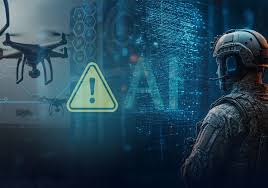
The future of warfare is expected to be shaped heavily by artificial intelligence. Military experts believe that future battles may look completely different from traditional wars fought mainly with soldiers, tanks, and fighter jets. Instead, AI-powered systems, autonomous machines, cyber warfare technologies, and intelligent communication networks could dominate the battlefield. In future conflicts, satellites, drones, sensors, military vehicles, and soldiers may all be connected through advanced AI-driven networks that continuously share information in real time. Artificial intelligence could instantly analyze battlefield conditions, detect threats, predict enemy movements, and help commanders make faster and more accurate decisions. This high level of coordination could allow military operations to become more synchronized, efficient, and precise than ever before, with many systems operating automatically without constant human control.
Autonomous drone swarms are also expected to become a major part of future warfare. Instead of relying only on a few expensive fighter jets or large military aircraft, countries may deploy hundreds or even thousands of intelligent drones working together as coordinated robotic fleets. These AI-powered drones could perform surveillance, electronic warfare, supply delivery, reconnaissance, and precision attacks with minimal human involvement. At the same time, robotic soldiers and autonomous ground vehicles may begin playing larger roles in military operations, especially in dangerous frontline missions where human lives are at risk. While these technologies could reduce casualties among soldiers and make military operations more efficient, they also raise serious concerns about loss of human control, accidental attacks, and the growing dependence on machines during warfare.
AI-powered cyber warfare may become one of the most dangerous aspects of future conflicts. Instead of attacking only with missiles, bombs, and traditional weapons, countries could launch advanced cyberattacks targeting enemy communication systems, satellites, financial networks, power grids, transportation systems, and military infrastructure. Some experts believe future wars may begin in cyberspace long before physical combat starts. Space could also become a critical battlefield in the AI era, as artificial intelligence-powered satellites may control communication, navigation, surveillance, and missile defense systems. However, the rise of AI warfare also creates major fears around the world. Fully autonomous weapons could reduce human involvement in life-and-death decisions, while extremely fast AI systems might increase the risk of accidental escalation during international tensions. Because of these dangers, many scientists, researchers, and international organizations are calling for global laws and regulations to control military AI development before autonomous warfare becomes uncontrollable. The future battlefield may no longer be dominated only by human intelligence; it could become a world where algorithms, machines, and artificial intelligence play a decisive role in determining the outcome of wars.
CONCLUSION:
In conclusion, artificial intelligence is rapidly transforming the future of warfare and becoming one of the most powerful military technologies ever created. The Pentagon’s massive investments in AI-powered systems show that future wars may depend not only on soldiers, tanks, and weapons, but also on data, algorithms, autonomous machines, cyber systems, and intelligent decision-making technologies. From AI-powered drones and robotic combat vehicles to advanced surveillance systems and cyber warfare, artificial intelligence is changing the way militaries prepare for and fight conflicts. The United States is working closely with major technology companies to develop next-generation military AI systems, while countries such as China and Russia are also accelerating their own AI defense programs. This growing competition is creating a global AI arms race that could shape international security and military power for decades to come.
The future of warfare is entering a new technological era in which artificial intelligence may become as important as nuclear weapons, fighter jets, and missiles once were. AI has the potential to improve military efficiency, reduce risks to soldiers, and strengthen national defense, but it also creates serious dangers involving autonomous weapons, cyberattacks, surveillance, and loss of human control over deadly systems. Whether AI-powered warfare will make the world safer or more dangerous depends on how governments, scientists, and international organizations choose to regulate and control this rapidly advancing technology. One thing is certain: the age of AI warfare has already begun, and its impact on the future of humanity could be enormous.
KNOW MORE:
INTERNAL LINKS:
https://techman.live/samsung-galaxy-s26-series-review-is-this-the-best-phone-of-2026/
https://techman.live/indias-thorium-revolution-the-secret-power-behind-stage-2-nuclear-program/
EXTERNAL LINKS: