

INTRODUCTION:
The world is changing at an extraordinary pace. We are moving towards a future that goes far beyond smartphones, computers, and smart cities. Imagine a world powered by intelligent systems, where robots work alongside humans, artificial intelligence performs complex tasks with remarkable precision, and advanced medical technologies detect diseases before symptoms even appear. Nanorobots could one day help target diseases from within the human body, while intelligent machines transform almost every field, from healthcare to space exploration and national defence. At first glance, this future seems to fulfil a dream humanity has pursued for centuries: to become stronger, smarter, and faster by creating machines capable of performing tasks beyond our natural abilities. But what if the next stage of human evolution is not simply about building better machines, but about becoming part of them?
Imagine a soldier who loses a leg during a military operation or a person who loses an arm in a devastating accident. Today, such injuries can create enormous physical and emotional challenges, sometimes forcing people to abandon their careers and dreams. But what if advanced bionic limbs could restore lost abilities and even provide capabilities beyond those of biological limbs? What if neural implants could help restore certain functions, brain-computer interfaces could enable direct communication with computers, and robotic exoskeletons could help people walk, lift heavy objects, or perform physically demanding tasks? Imagine a person with a bionic leg capable of running faster than an ordinary human, a robotic arm capable of lifting objects far heavier than a biological arm, or a visual implant that restores sight and potentially allows the perception of additional wavelengths of light. Although some of these possibilities remain experimental or speculative, existing technologies such as advanced prosthetics, cochlear implants, and brain–computer interfaces are already bringing aspects of this future closer to reality.
This brings us to a fascinating concept: the cyborg, or cybernetic organism, a being whose biological body is integrated with technological components. Cyborg technology could help people overcome physical limitations, restore lost abilities, and potentially enhance certain human capabilities. However, this exciting vision also raises important questions. What exactly is a cyborg, and how does cyborg technology work? What advantages could it offer humanity, and what risks might it introduce? Could these technologies transform the way we live, work, and interact with the world? And, perhaps most importantly, if machines become an integral part of our bodies, where will we draw the line between human and machine? In this article, we will explore the world of cyborgs, examine the technologies making this vision possible, and uncover both the extraordinary opportunities and the ethical challenges that could shape the future of human evolution.

WHAT IS A CYBORG:
A cyborg is commonly misunderstood as a fully robotic android or a person with obvious, sci-fi-style metal limbs. In reality, a cyborg is a being whose biological body is integrated with mechanical or electronic technology. The main purpose of this integration is to restore, support, or potentially enhance human abilities. For example, imagine a person in the future with a powerful robotic hand capable of lifting extremely heavy objects or an advanced artificial eye that can detect infrared radiation. Sounds fascinating, right? Although such abilities may seem like science fiction, some forms of cyborg technology already exist today.
Modern cyborg-related technologies include bionic limbs, cochlear implants that help restore hearing, certain visual prostheses, neural implants, and robotic exoskeletons. These technologies can help people overcome specific physical limitations and perform tasks that might otherwise be difficult or impossible. Looking ahead, advances in artificial intelligence, biotechnology, and neuroscience could enable closer integration between humans and machines, potentially extending some human capabilities beyond their natural limits. However, abilities such as lifting cars with a robotic hand or shooting lasers from the human body remain science fiction. Cyborg technology represents an important step towards a future in which humans may overcome certain biological limitations through advanced engineering.
WHAT CYBORG CAN DO:
As we have seen, a cyborg is a fusion of human biology, mechanical systems, and advanced technology. The abilities of a cyborg depend on the type of technological enhancements integrated into their body. For example, a person with a bionic limb may be able to perform tasks that would otherwise be difficult or impossible for them, while someone with a neural implant may be able to control certain digital devices using brain signals. In the future, further advances in cyborg technology could allow humans to perform tasks beyond their natural capabilities, potentially transforming how we work, communicate, and interact with the world around us.
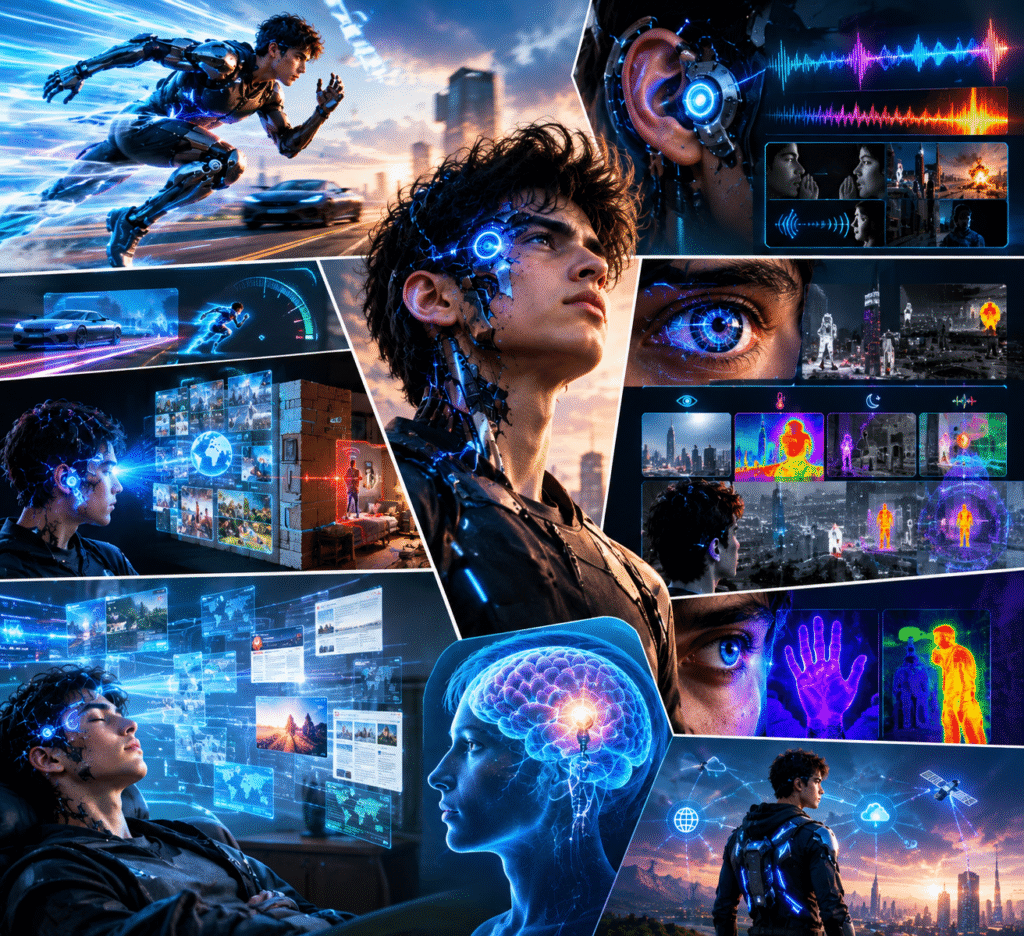
Enhanced Strength
Humans have natural limbs made up of bones, muscles, and joints that allow us to move, lift objects, and perform everyday tasks. Although exercise can improve muscular strength and endurance, the human body still has physical limits, and excessive loads can cause injuries or fractures. Robotic limbs and powered exoskeletons could help overcome some of these limitations by assisting movement, supporting heavy loads, and improving physical performance while reducing the effort required for certain tasks. For example, a soldier who loses an arm during a military mission could use an advanced robotic limb to regain some arm functions and perform essential tasks more effectively. In the future, further advancements in robotics and AI could make artificial limbs more powerful, precise, and responsive, potentially expanding human physical capabilities beyond their natural limits.
Improved Mobility
When we run a race or marathon, our bodies can experience muscle cramps, fatigue, and reduced mobility, which can affect our speed, endurance, and overall performance while increasing the risk of injury. Advanced bionic legs and powered exoskeletons could help address some of these limitations by supporting natural leg movements and assisting activities such as walking, climbing, and running. With improved mechanical design, artificial joints, and AI-powered control systems, future bionic legs may offer greater stability, precision, and a wider range of motion, potentially allowing users to move more efficiently and perform certain physical tasks beyond their natural capabilities. However, current technology cannot completely eliminate fatigue, muscle cramps, or the need for rest, and whether future bionic legs could surpass human running speed and endurance will depend on further technological advancements.
Restored or Enhanced Senses
Human senses have natural limitations: our ears can typically hear sounds between 20 Hz and 20,000 Hz, while our eyes can detect only a small portion of the electromagnetic spectrum known as visible light, making it difficult for us to see clearly in complete darkness. However, advanced artificial eyes and electronic hearing systems could help cyborgs overcome some of these limitations. Imagine being able to switch between different sensory modes at will, hear ultrasonic sounds beyond the normal human hearing range, and see infrared radiation to detect heat emitted by objects and living organisms. With advanced imaging technology, a cyborg could also zoom in on distant objects, making them appear closer, or use thermal vision to detect heat signatures from animals, including snakes, in dark environments. In the future, integrating these technologies with the human nervous system could allow cyborgs to perceive information that ordinary human senses cannot detect, potentially transforming how we explore and interact with the world around us.
Brain-Machine Communication
Today, controlling machines and electronic devices usually requires physical interaction, such as pressing buttons, operating switches, or using a remote control. However, in dangerous environments, such as industrial plants, nuclear facilities, or military missions, physically accessing a machine can put human lives at risk. In the future, advanced neural implants and brain-computer interfaces could allow cyborgs to control compatible computers and machines directly through decoded brain signals, potentially enabling operators to perform certain tasks from a safe distance. For example, trained operators could use these systems to control industrial equipment, operate machinery in hazardous environments, or interact with specially designed safety systems without needing to touch physical controls. With further advancements, this technology could even allow people to control smart home devices, such as washing machines, fans, air conditioners, and automatic doors, through brain signals. It might feel like telekinesis, the ability to control objects with the mind, but instead of supernatural powers, it would rely on neural signals, computers, and connected electronic systems.
Increased Endurance
Today, one of the greatest challenges faced by military personnel during demanding missions is fatigue, which can reduce concentration, physical performance, and decision-making ability, potentially putting lives at risk. In the future, advanced cybernetic enhancements, such as powered exoskeletons, intelligent prosthetic limbs, and wearable systems that monitor the body’s condition, could help reduce physical strain and support people working in extreme environments. These technologies could benefit not only military personnel operating in challenging conditions but also astronauts conducting research in space, rescue teams searching for survivors in disaster zones, and industrial workers handling heavy machinery. For example, an astronaut equipped with an advanced powered exoskeleton could receive additional physical support while performing demanding tasks, while a rescue worker could use robotic assistance to move heavy debris more efficiently. Although such technologies cannot eliminate fatigue or replace the body’s need for rest, they could help people work more safely, maintain performance for longer periods, and accomplish demanding tasks in less time, potentially increasing productivity across multiple fields.
Better Health Monitoring
Today, when we feel sick, we often need to visit a hospital and undergo medical tests, such as X-rays, MRI scans, or blood tests, to identify the underlying problem. Sometimes, a serious disease may remain undetected until it reaches an advanced stage, leaving patients and their families frightened and uncertain about the future. Imagine a future in which advanced implanted sensors could continuously monitor vital signs, track changes in the body’s functioning, and alert users or healthcare professionals when something unusual occurs. Combined with artificial intelligence, these technologies could help identify potential warning signs of certain diseases earlier, allowing doctors to investigate the problem and begin treatment sooner. For example, if an implanted monitoring system detects an unusual change in a person’s heart rhythm or other measurable biological signals, it could send an alert before the person notices any symptoms. Such technology could make healthcare more proactive, personalized, and convenient, potentially reducing the risk of complications and improving quality of life. However, these implants would not detect every disease or eliminate the need for medical examinations; regular check-ups and professional diagnosis would remain essential.
Faster Access to Information
Imagine a future in which advanced brain-computer interfaces could connect the human brain to digital information, allowing people to search for and access knowledge through neural signals without needing an external device, such as a smartphone or smartwatch. Instead of physically typing a question into a search engine, you could interact with a connected system using your thoughts and receive relevant information almost instantly. For example, if you found yourself lost in a jungle, such a system could provide survival instructions, identify potentially dangerous plants, or guide you through essential steps for finding shelter and clean water. Similarly, it might help you access swimming techniques, understand complex scientific concepts, or retrieve information while preparing for an examination. Imagine having access to an enormous digital library whenever you need it, making learning and problem-solving faster and more convenient. However, accessing information is not the same as automatically mastering a skill or gaining knowledge permanently; you would still need practice, understanding, and critical thinking. Although direct brain-to-digital knowledge access remains largely experimental and futuristic, advances in neuroscience and AI could eventually transform how humans learn, remember, and interact with information.
DISADVANTAGES OF CYBORGS:
Every coin has two sides, and cyborg technology is no exception. Although cybernetic enhancements could transform our world by helping people overcome physical limitations, improve healthcare, increase productivity, and simplify everyday tasks, we cannot ignore the potential risks and disadvantages that come with these advancements. From health complications and privacy concerns to the misuse of enhanced abilities and growing social inequality, these challenges must be carefully addressed. As society moves towards a future where humans and machines become increasingly integrated, we must ensure that technological progress benefits humanity as a whole rather than creating new problems that future generations will struggle to overcome.
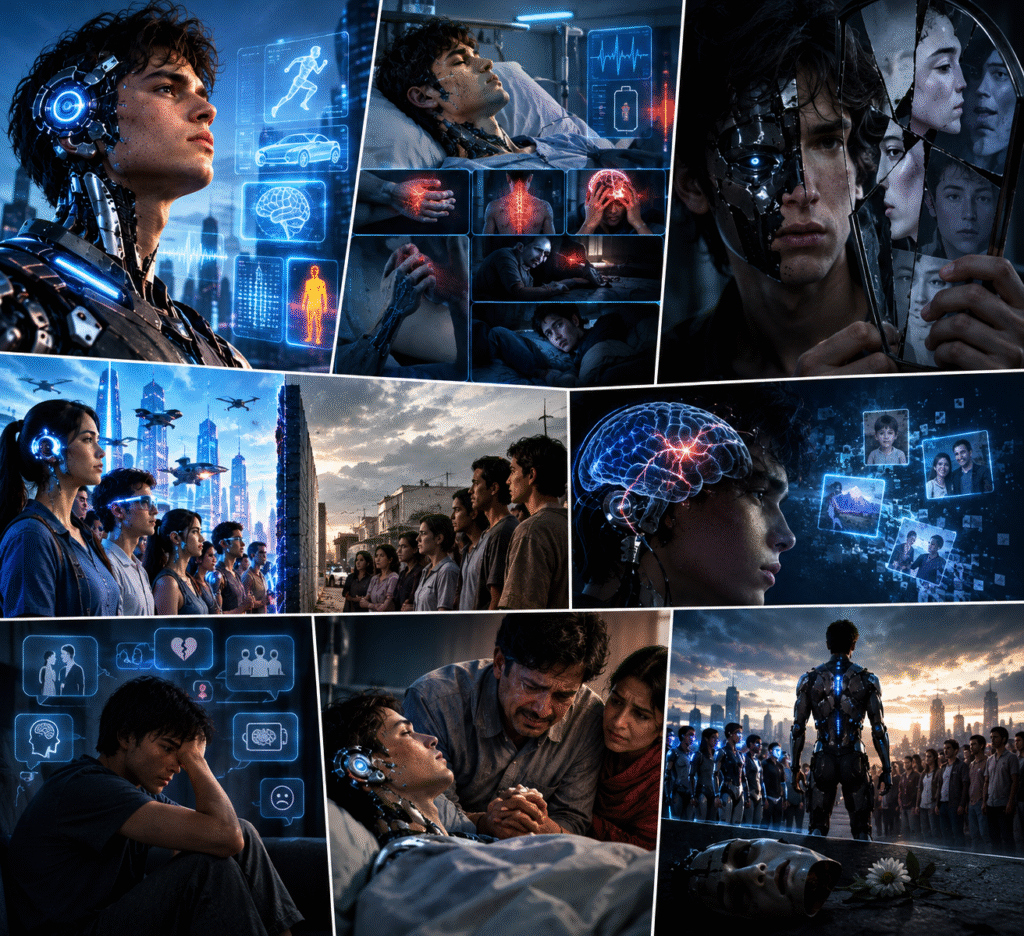
High Cost
One of the first disadvantages of cyborg technology is its high cost. Developing advanced robotic limbs, neural implants, and other cybernetic enhancements requires expensive materials, sophisticated machinery, and years of scientific research. Since this technology is still developing, many of its products may remain too expensive for ordinary people, making them affordable mainly to wealthy individuals. As a result, a gap could emerge between those who can afford enhanced abilities and those who cannot. If only rich people have access to technologies that improve physical strength, senses, or mental capabilities, it could increase social inequality and give them an unfair advantage over others. Some companies may also keep prices high to recover research costs and earn profits. Consequently, cyborg technology could create a world where a person’s opportunities depend not only on their skills and hard work but also on their financial resources, while others are left watching as the wealthy gain access to abilities they can only dream of.
Cybersecurity Risks
Another major disadvantage of cyborg technology is the risk of cyberattacks and hacking. If a cyborg uses a brain implant connected to the internet to access information or control electronic devices, the system could become a potential target for hackers. If security weaknesses allow an attacker to interfere with the implant or its connected systems, it could threaten the user’s privacy, safety, and ability to control certain functions. In an extreme scenario, a compromised system could cause dangerous malfunctions that might harm the cyborg or put other people at risk. The danger could become even greater if powerful individuals, such as billionaires or influential leaders, use advanced cybernetic enhancements and their systems are targeted by hackers. Therefore, strong cybersecurity, strict safety standards, and reliable control mechanisms would be essential to protect both cyborgs and society. Although remotely taking complete control of a person’s brain remains science fiction with current technology, the possibility of cyberattacks on future connected implants is a serious concern that researchers must consider.
Ethical Issues
Another major disadvantage of cyborg technology is the possibility of increasing the gap between the rich and the poor. If wealthy and powerful billionaires gain access to advanced cybernetic enhancements that improve their physical abilities, senses, or decision-making, they could become even more powerful than ordinary people. As a result, the gap between the privileged and the rest of society could grow, creating an unfair advantage for those who can afford these technologies. Ordinary people might fear that their concerns would be ignored and their rights overlooked by individuals with extraordinary resources and enhanced abilities. In the worst-case scenario, some powerful individuals might misuse their enhanced capabilities, disregard ethical responsibilities, and believe they are above the law. Therefore, without proper regulations and equal access, cyborg technology could increase social inequality, concentrate power in the hands of a few, and create serious challenges for justice and fairness in society.
Dependence on Technology
Another major disadvantage of cyborg technology is its dependence on mechanical systems, electronic components, and advanced software. Cybernetic enhancements rely on complex technologies that can experience technical failures, software bugs, hardware damage, or power shortages. If a cyborg heavily depends on these systems to perform everyday activities, even a minor malfunction could cause serious problems. For example, a robotic limb might suddenly stop responding during an important task, or an implanted device could malfunction because of a software error or power failure, potentially putting the user’s safety at risk. Unlike natural body parts, which function through biological processes, artificial components require maintenance, repairs, and reliable power sources. Therefore, despite the remarkable possibilities of cyborg technology, its dependence on machines could create new vulnerabilities, making reliable backup systems, regular maintenance, and fail-safe mechanisms essential for protecting users.
Health and Safety Risks
Another major disadvantage of cyborg technology is the risk of biological complications and the body’s rejection of implanted devices. The human body is an extremely complex biological system, and although medical science has made remarkable progress, many aspects of how it functions are still being studied. When cybernetic implants are introduced into the body to enhance human abilities, the immune system may react to certain materials as foreign objects, potentially causing inflammation, infection, or other complications. In some cases, patients may require additional surgery to repair, replace, or remove a malfunctioning implant. Device failures or poor integration with the body’s tissues could also reduce the implant’s performance or make it unusable. For example, an advanced robotic limb or neural implant could stop functioning properly if its components become damaged or the surrounding tissue develops complications. Therefore, despite the potential benefits of cyborg technology, ensuring that artificial devices remain safe, compatible with the human body, and reliable over the long term will be a major challenge for scientists and medical professionals.
Loss of Human Identity
Another important concern surrounding cyborg technology is the question of human identity and emotions. As humans increasingly integrate mechanical components and advanced electronic systems into their bodies, the boundary between humans and machines may become less clear. This raises several important questions: If a person replaces multiple body parts with artificial components, should we still consider them fully human, or does their identity begin to change? Can a cyborg experience emotions such as love, happiness, fear, and sadness in the same way as other humans? Could advanced neural implants influence a person’s thoughts, memories, or emotional responses? Most importantly, would enhancing the human body with machines change what makes us human, or would our identity remain rooted in our consciousness, experiences, and emotions? Although artificial limbs and medical implants do not automatically remove a person’s humanity or emotional abilities, future developments in brain-computer interfaces could raise complex ethical and philosophical questions. As cyborg technology advances, society will need to consider not only what machines can help humans achieve but also how these enhancements might affect our sense of identity, individuality, and humanity.
CONCLUSION:
Cyborg technology has enormous potential to take human civilisation to the next level by overcoming certain physical limitations, improving quality of life, and expanding human capabilities beyond what is naturally possible. However, these advancements also bring significant risks that society cannot ignore. Ethical concerns arise over whether people will use enhanced abilities responsibly or misuse them to gain power over others. Social inequality could deepen if cybernetic enhancements are available only to the wealthy, potentially creating a divide between enhanced individuals and those who cannot afford such technology. Security is another major challenge, as connected implants and cybernetic systems could become targets for hackers, potentially compromising users’ privacy, safety, or control over certain functions. In extreme scenarios, failures or the misuse of advanced systems could put other people at risk. Furthermore, questions about human identity, biological compatibility, and dependence on machines must be carefully considered before these technologies become widespread. Ultimately, cyborg technology could reshape the future of humanity, but its success will depend not only on technological progress but also on strong ethical principles, effective safety measures, and responsible regulations that ensure these innovations benefit humanity as a whole.
KNOW MORE:
INTERNAL LINKS:
https://techman.live/pentagon-ai-warfare-how-artificial-intelligence-is-changing-future-wars/
https://techman.live/samsung-galaxy-s26-series-review-is-this-the-best-phone-of-2026/
EXTERNAL LINKS: